CASSOULET DISASTER
A comeback story.

Every year, Hunter makes a cassoulet. The famously rich and laborious dish from the southwest of France is a stunner of a dish, layering par-cooked tarbais beans with sausage, duck confit and various pig parts, then cooking the whole thing in a stock enriched with yet more pork products until the whole thing is saturated with fat and forms a craggy, golden crust on top. It’s an impressive dinner party centerpiece and, in these fiber-centric times, just bean-y enough to count as digestively healthy if you just ignore all the other ingredients.
This year’s cassoulet was going pretty well, and I was excited to walk you all through the process. Then this happened.
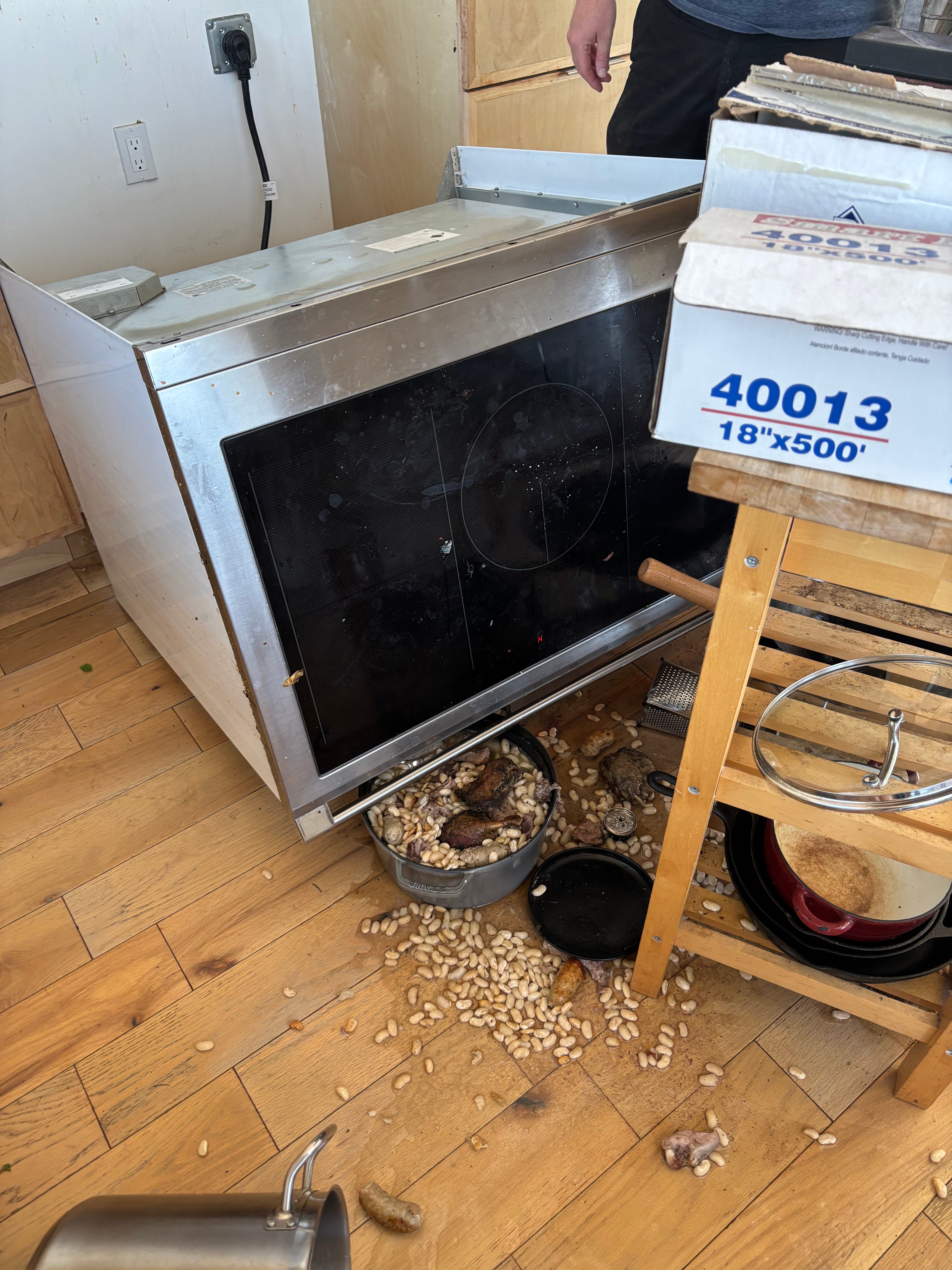
What you are looking at is an entire 36-inch oven, toppled over and propped up by a 7-quart Dutch oven (one of two!) still, somehow, filled with cassoulet. But still missing what felt like several quarts of porky liquid, sloshed all over our kitchen floor just three hours before about two dozen guests were due to show up.
It was one of the worst kitchen disasters I have experienced in my entire life. At one point I was slip-and-sliding around our dining table on my hands and knees, trying to get a grip on the fat-slicked wood so I could try to wipe it up. We ran out of paper towels at the most inopportune time possible. Hunter is still on the hook for an apology gift.
And somehow, it all worked out in the end.
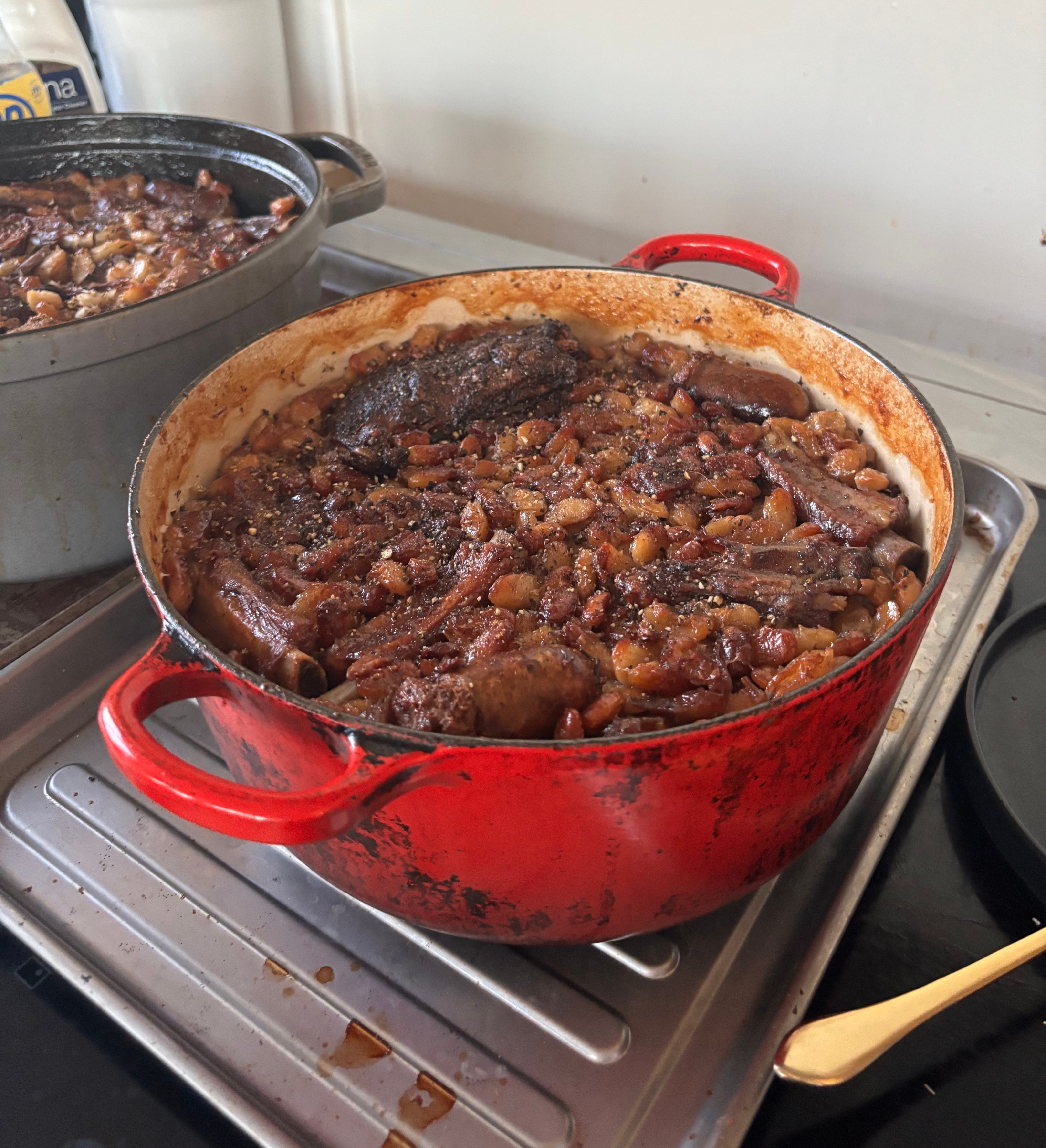
Let’s rewind!
The weeklong effort to make cassoulet began by special-ordering five pounds of beans from Rancho Gordo. (Yes, this was in addition to the six pounds we receive every quarter. Our Q2 box is imminent!) Hunter was thankfully convinced to use only four in the end, so we have an extra pack of white legumes kicking around our pantry now.
Hunter works loosely off the recipe in Paul Kahan’s Cheers to the Publican, itself named for an indebted to the French chef David Campigotto, whose orthodoxy includes refusing to use bread crumbs as a cheat code for a crunchy crust. I was lucky enough to have Campigotto’s cassoulet at an LA popup sans Hunter a couple years ago, giving me the delightful ability to lord my firsthand knowledge of how this version is supposed to taste over his head whenever I please.
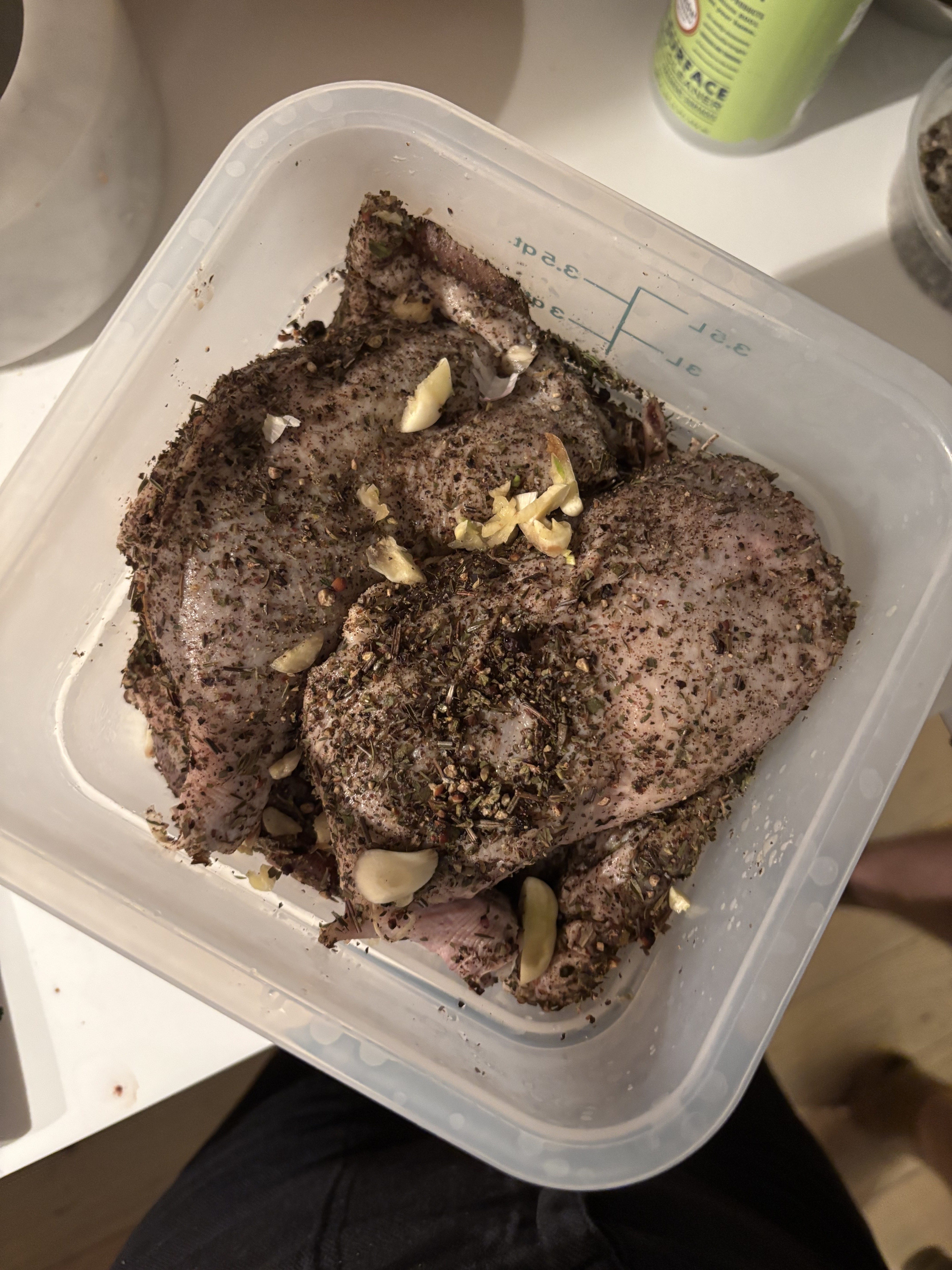
My main piece of feedback on earlier cassoulets is that they haven’t been well-seasoned enough, which is totally understandable in a dish with so much fat that it can require a lot of salt to not end up, well, kinda bland. This was the first year Hunter used the Kahan sub-recipe for duck confit, which involves marinating leg quarters in copious amounts of black pepper, garlic and herbes de Provence before cooking. (Hunter opted for a countertop sous vide over firing up the oven.) Side note: sourcing quarters of duck meat at sub-Whole Foods prices is very annoying and required trips to three separate Chinese grocery stores, including two different locations of 99 ranch. Cassoulet is not for the weak!
For the purposes of this blog post, the opposite of “weak” is “person who decides to make Toulouse sausage — a simply seasoned blend of garlic, black pepper, white wine, and more herbes de Provence with pork belly, loin and fat — from scratch.”
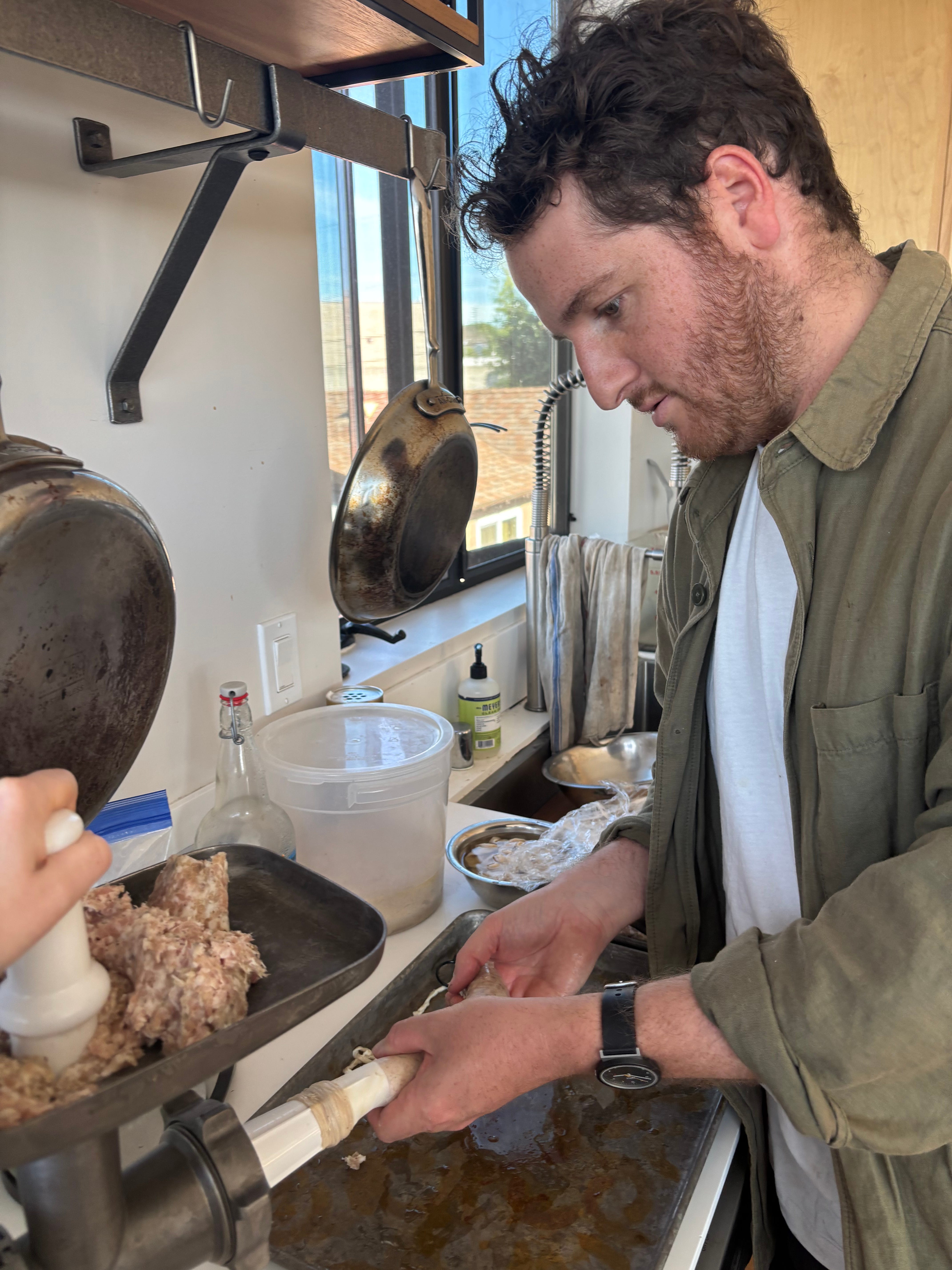
You can start to understand why this was about a weeklong effort all-in.
Then, after the sausages dried out overnight and a stock was made using trotters sourced from the good people at Peads & Barnetts via the Hollywood Farmers Market, and the spare ribs (also Peads) were sliced into individual servings, it was time to assemble.


Before I get into The Incident, I want to take a moment to admire just how good everything looked before it went into the oven. Were we ever so young!
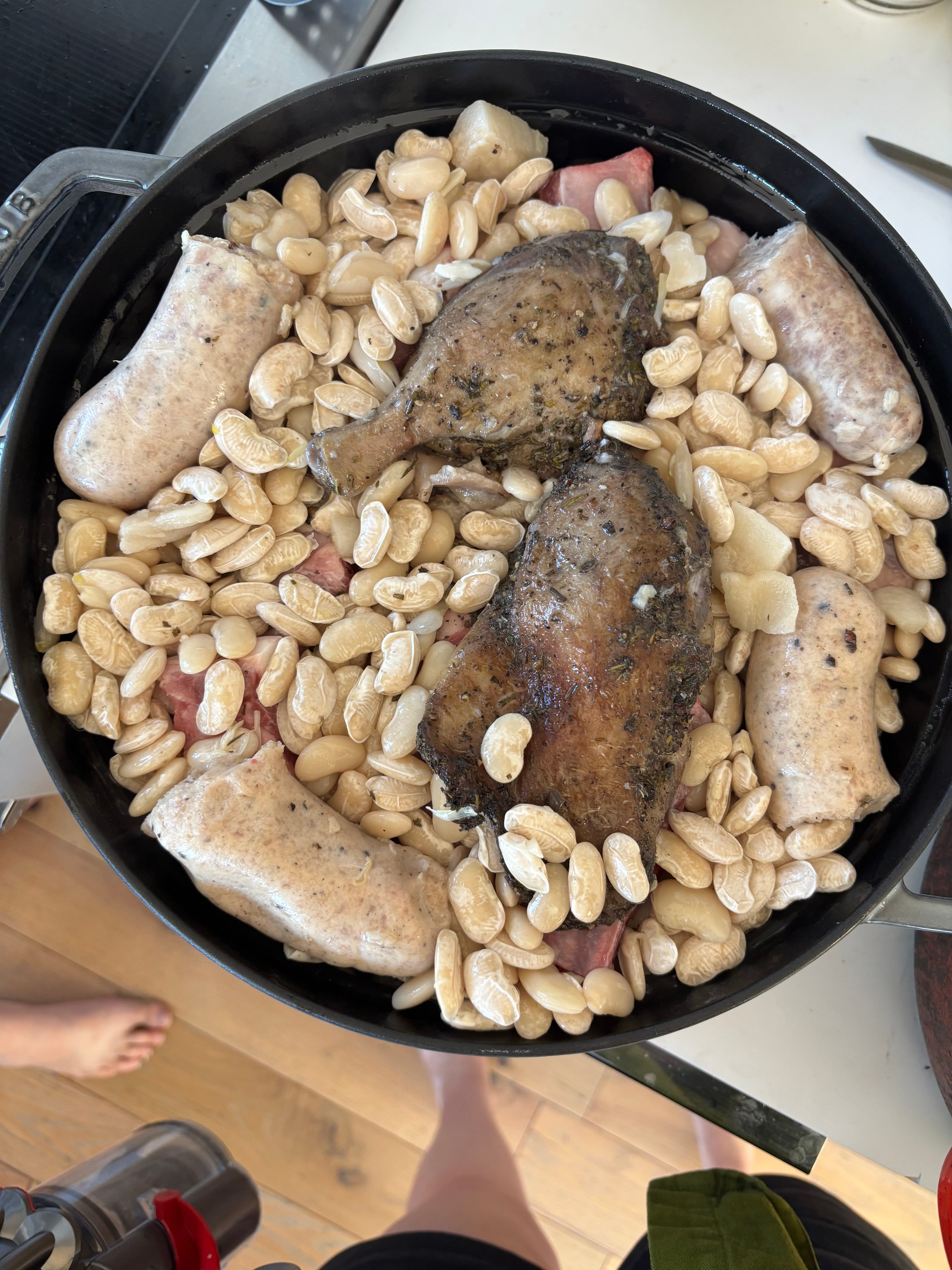
So, how does an oven end up on the floor? When two extremely full, extremely heavy pots of cassoulet are on a rolling rack directly above a second rolling rack with a 20-pound pizza stone resting on top of it, that’s how. Hunter rolled the top rack forward to check on the cassoulet, gravity did its work, and boom! Disaster.
(Hunter would very much like me to add that the oven was resting on top of a wooden structure his contractor jerry-rigged to have insufficient points of contact with the ground, so it’s not entirely user error. My counterpoint to this is that the oven has never completely tipped over on my watch.)
Thanks to the magic of electric-powered appliances, the ensuing mess was not actively dangerous to our health, just disgusting. I picked individual beans out of our Ikea island with my bare hands. The broom I used for a preliminary sweep-up is probably unusable now. An oven knob went missing, only for us to belatedly discover it inside the cassoulet. (It’s made of metal, not microplastics.) But after an hour, a vigorous mop and a second round with a Swiffer and some wooden floor cleaner, the kitchen was in shockingly good shape. All the cassoulet needed was some more bake time anyway.
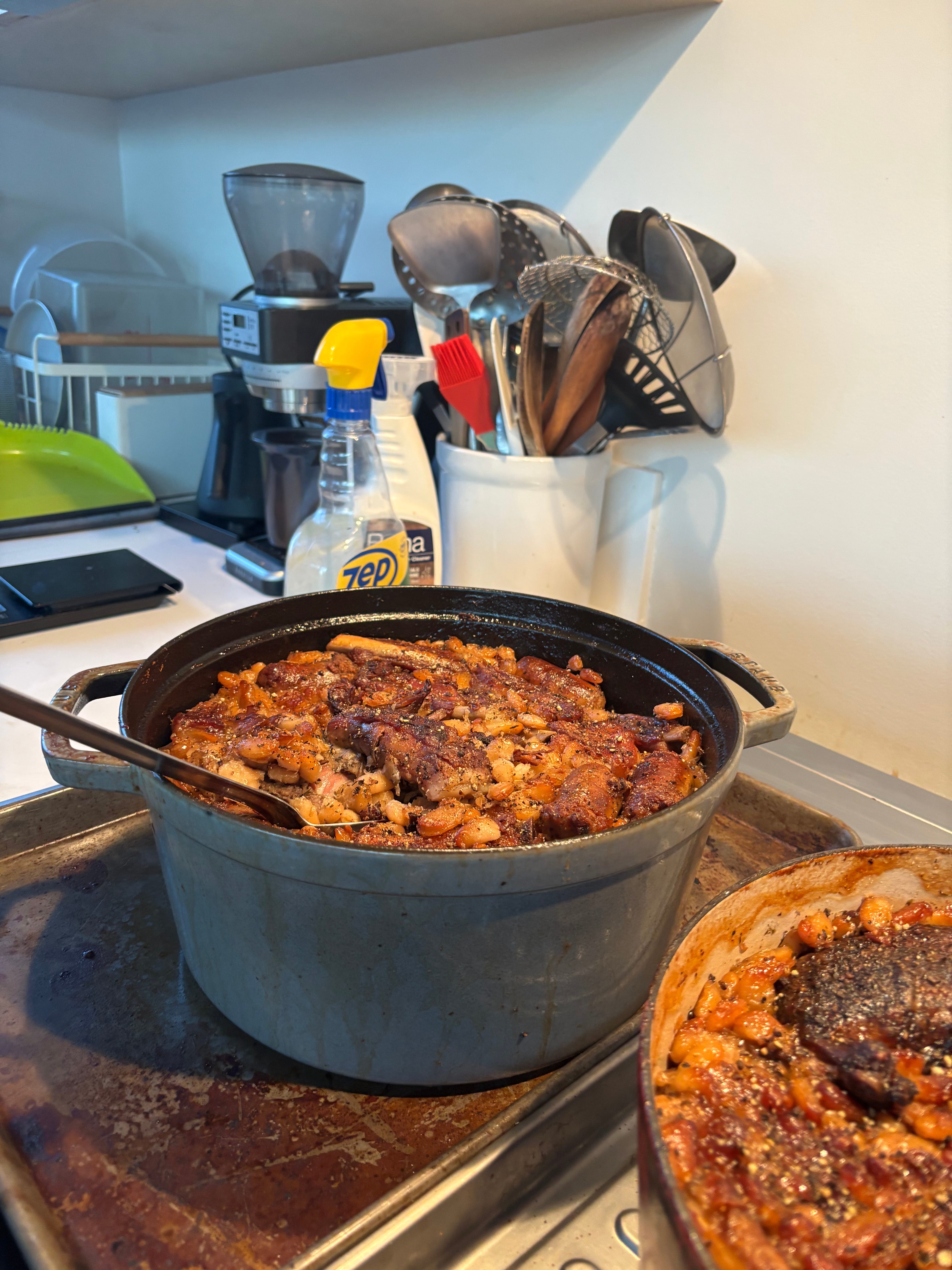
I don’t know it was the ensuing delirium, but this really was the best cassoulet Hunter’s ever made. He served it with homemade bread, fancy French butter, and a salad of homegrown sorrel, parmesan and pickled fennel in a Meyer lemon (also homegrown!) dressing. Friends brought reinforcements, like Lani’s butter-enriched “croissant” sourdough. Dessert was a Basque cheesecake and petit fours from the fine folks at Valerie.


What did we learn from this? Mostly the weight limit of our main oven. (The cassoulets were split between the once-again-upright-and-miracoulously-still-functional original and the countertop Anova purchased with our wedding slush fund.) But it was still nice to see that so much labor wasn’t completely derailed by an 11th-hour snafu, and that we were mostly able to laugh about it by the time people showed up — though we still told guests to keep their shoes on inside before taking our plates up to the roof. Thanks to our friend Meghan for the photo below.
And we’re probably still gonna do it again next year.